Showing posts with label gameplays. Show all posts

Sunday, June 1, 2008

Prince of persia: gmaes features, reviews, characters, gameplay at discountedgame

prince of persia at discountedgame gmaes
gmaes Developer(s) Ubisoft Montreal
gmaes Publisher(s) Ubisoft
gmaes Series Prince of Persia
gmaes Engine Scimitar
gmaes Platform(s) PlayStation 3, Microsoft Windows, Xbox 360
gmaes Release date Late 2008
gmaes Genre(s) Action-adventure, Platform
gmaes Mode(s) Single-player
gmaes Media Blu-ray Disc, DVD-DL
gmaes Input methods Keyboard, mouse, Xbox 360 controller, SIXAXIS controller, DualShock 3
Prince of Persia is
an upcoming video gmaes developed by Ubisoft Montreal and published by Ubisoft. It is scheduled to be released on late 2008 for Windows, PlayStation 3 and Xbox 360. It is a new chapter in the Prince of Persia universe and it introduces a new gameplay, along with a fresh "illustrative" visual style.

gmaes Plot Summary
According to Ubidays Interview, a new Prince of Persia will be depicted as a wanderer at first, who while returning home from an adventure with his "bearings" and a donkey named "Lady with Treasure", to spend his rest of life in peace. But all of a sudden, he is caught by a fierce sandstorm, which throws him off of his original path, and he finds himself in a forbidden land - a mythical garden of beauty, dominated at its center by a massive Tree of Life. Imprisoned in the Tree of Life is Ahriman, the "Ancient Evil God of Darkness", who was imprisoned within the tree by his twin brother Ormazd, the "Ancient God of Light". The Prince encounters Elika, a descendant of the Ahuras, a group of people who guarded the imprisonment of Ahriman. Together, they witness the destruction of the tree. After being set free, Ahriman starts corrupting the lands with darkness and evil. Elika asks the The Prince for his help to bring back peace to the world by stopping Ahriman, and cleansing the world of it's darkness.

gmaes Development
prince of persia at discountedgame gmaes
The Prince and Elika running along the wall.

Proof of development for the gmaes was found when, on September 21, 2006 a leaked RAR file contained concept images, although no comment was made by Ubisoft. Also, on January 23, 2008, some screenshots from the gmaes were leaked onto the internet, and again Ubisoft made no comments.

On April 1, 2008, Ubisoft registered the domain princeofpersiaprodigy.com.
In May, 2008, Ubisoft confirmed the gmaes as a work-in-progress. They stated to expect a release at the end of 2008, and gave many details about the plot and gmaes play in this gmaes . In one such interview, they stated that the general staples of the gmaes play are to remain intact, including platforming, and combat. Although the gmaes focuses more on one-on-one combat, similar to the original Prince of Persia trilogy, rather then fighting almost dozens of enemies, like in the Sands of Time trilogy.
prince of persia at discountedgame gmaes
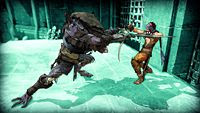
The Prince fighting The Hunter.

On May 8, 2008, Ubisoft released an official video of a concept artist designing the Prince character for the gmaes. The "speed art" video shows a full-bodied new prince to be created on Photoshop. There was another fast-forward concept art drawing video released on May 22, detailing a female character Elika
The gmaes will use a heavily modified version of the Schmitar Engine, which was also used in Assassin's Creed. Developers chose to implement an illustrative graphical style, similar to cel-shaded graphics. Other features include improved artificial intelligence, detailed graphics, rich environments and an open-world, that will allow to create a non-linear gmaes play.

Characters
prince of persia at discountedgame gmaes
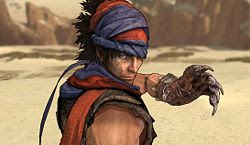
The Prince, as he appears in Prince of Persia (2008).

The Prince
The Prince's character is a whole new invention of this gmaes and is totally different from the one of The Sands of Time trilogy. He is stated to be a normal person, rather a thief at first, and not a noble Prince. He is a wanderer, a vagabond, wishing to make some money and then to go back home and spend his earnings on women and luxury.

He is an extremely agile and cunning warrior, proving to be a very able swordsman. In all the concept arts, he appears clad in ninja-styled clothes with red & blue colour scheme. Significantly, in all these arts and videos, he wields a long sword, and wears a spiked gauntlet in his left hand. For the first time in any Prince of Persia game, the concept of sword and scabbard has been introduced along with the concept of a double edged sword.

Elika
prince of persia at discountedgame gmaes
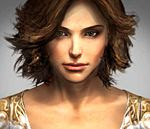
Concept-Art Render of Elika.

The gmaes producers revealed that they wanted a secondary character, who would really be a partner to the Prince in a true sense, and "not become any kind of burden on him or his way", but being a helpful and a friendly asset. Elika is said to be a large innovation to this gmaes , as the time-controlling powers of the Prince were in The Sands of Time trilogy. She is described as a "deadly ally", and would be a strong supporting character, who will affect every aspect of the game, as she accompanies the Prince throughout the gmaes. This includes exploration, combat and puzzle-solving. She would be able to perform some special moves (in tandem with the Prince, as well as some of her own) and use her magical abilities to aid the Prince in his quest. She would guide Prince on the right track in case he is lost in his way in the gmaes and assist him in solving multiple puzzles as well.


The inspiration to create Elika was drawn from supporting characters from other media, like Elizabeth Swann from the Pirates of the Caribbean film series; Padmé Amidala from Star Wars; and Arwen from The Lord of the Rings trilogy. It was revealed that she is descended from the Ahuras and has lived in a land without any possibility to contact the outside world.


Watch out for more gmaes information at discountedgame

Wednesday, May 21, 2008

Dragon Quest Swords: The Masked Queen and The Tower of Mirrors: features, gameplay, plot at discountedgame

Dragon Quest Swords: The Masked Queen and the Tower of Mirrors  at discountedgame-gmaes

Dragon Quest Swords: The Masked Queen and the Tower of Mirrors

gmaes North American box art
gmaes Developer(s) : 8ing/Genius Sonority (planning)
gmaes Publisher(s) : Square Enix
gmaes Designer(s) : Yuuji HoriiAkira ToriyamaKoichi SugiyamaManabu Yamana
gmaes Series : Dragon Quest
gmaes Platform(s) : Wii
gmaes Release date : JP July 12, 2007[1]NA February 19, 2008AUS May 8, 2008 EU May 9, 2008

Genre(s): Role-playing game
gmaes Mode(s) : Single playerMulti-player mini-games
gmaes Rating(s) : CERO: A (All ages)ESRB: T (Teen)OFLC: PGPEGI: 12+USK: 6
gmaes Media : Wii Optical Disc
gmaes Input methods : Wii Remote

Dragon Quest Swords: The Masked Queen and the Tower of Mirrors (ドラゴンクエストソード 仮面の女王と鏡の塔, Doragon Kuesto Sōdo: Kamen no Joō to Kagami no Tō) is a first-person adventure gmaes by Square Enix exclusive Nintendo's Wii game console. The game is a spin-off from the Dragon Quest series.

discountedgame
It is considered a discountedgame for it's price has dropped from $39.99 to $37.99. Click discountedgame astore for details.

Gameplay

A fight against the final story mode boss, Xiphos.

gmaes Battle system

Dragon Quest Swords utilizes an on rails first person Battle System. However, instead of using a handgun, Dragon Quest Swords uses the functions of the Wii Remote as a sword and a shield. The direction of a sword slash is dependent on the direction the player sways the Wii Remote. In order to defend from incoming attacks, the player has to use the Wii Remote to block enemy attacks.

A special attack, called a master stroke, can be used once the special attack gauge is filled. The gauge percentage increases by hitting enemies, hitting their projectiles back at them, or by blocking attacks. There are many master strokes, the distinct groups are: ice, fire, lightning, shadow, and general. Each group has a distinct colour. However, general strokes and buddy strokes look the same. A buddy stroke is a master stroke that can only be performed once that ally has gotten to a certain level, along with being with the hero. Master strokes are learned by tempering swords and getting new swords, while buddy strokes are obtained from the player's current partner.

Only the hero's allies (Anlace, Fleurette or Claymore) can cast magic and only one of them can accompany the hero at a time. The player can set how frequently they use magic or they can use magic manually by bringing up the menu.
Instead of random battles, monsters will always appear in the same order, in the same place.
This gmaes has 8 medicinal items, along with 8 tempering materials, although there are also two special items. The tempering materials are required to upgrade the hero's swords.

Mini gmaes

Dragon Quest Swords includes several mini gmaes. They can be played alone, or with up to three friends. These are broken into two types of gmaes that can be played at Stiletto's shop in town. One is a set of 3 dart games, in which the player uses the shield to catch darts, with different areas of the shield being worth different amounts of points. The second type is slime crisis, where the object of the game is to slay all the slimes as fast as possible. Both games award different prizes, based on points. The prize categories are for B, A, S, and X rank, with X being the highest.

gmaes Plot

Setting

There are ten specific areas in this game. The eight story mode areas, the second half of the eighth area, and the Olde Reflectory, which is a room unlocked after finishing story mode. It contains many bosses that were not in the story mode, along with stronger versions of some story mode bosses.

gmaes Characters

With the exception of the hero, whom the player is allowed to name, the gmaes 's major characters are all named after kinds of swords. Fleurette will call the hero a pet name. She will ask if "Blade" is OK. Clicking "Yes" will cause her to refer to the hero as "Blade" from then on. However, clicking "No" will allow the player to choose from other names.
Hero (主人公, Shujinkō)
Fleurette (セティア, Setia) Voiced by: Ayumi Kinoshita
Anlace (ディーン, Dīn) Voiced by: Ryōsei Konishi
Claymore (バウド, Baudo) Voiced by: Kenji Matsuda


Development

Originally planned to be a launch gmaes for the Wii, Dragon Quest Swords was released on July 12, 2007 in Japan. The game was released in North America on February 19, 2008. Under the spotlight of E3 2006 and in an unprecedented show of software support for a Nintendo console, Square Enix revealed that Dragon Quest Swords and Final Fantasy Crystal Chronicles: The Crystal Bearers would be exclusive Wii titles.
In a company press release, executive producer Yuu Miyake stated: “ Since 1986 the Dragon Quest series has gained acceptance around the world, and has been a staple of the videogame industry. We believe its appeal lies in simplicity that anyone can enjoy, and the excitement of becoming a hero in an epic adventure. With the Nintendo (Wii), we believe that these aspects of the Dragon Quest experience can be taken to a whole new level of fun and interaction. ”

The Dragon Quest Swords development team includes many of the original designers of Enix's flagship series. Creator Yuuji Horii was one of the first gmaes designers Nintendo president Satoru Iwata approached with the prototype Revolution controller. Horii contributed a video interview to Nintendo's Tokyo gmaes Show 2005 Revolution press conference. In it, he talked about making gmaes accessible to a greater market, and cutting to the essence of "fun." When asked about Nintendo's Wii Remote, Horii stated "I agree that many interesting gmaes can be created using this controller, but I still think that Nintendo would probably make the best games." Horii is joined by famed Dragon Ball creator Akira Toriyama and "the father of video gmaes music" composer Koichi Sugiyama. According to video gmaes website IGN, Square Enix representatives have branded Dragon Quest Swords a sequel to Kenshin Dragon Quest, a motion-activated plug-and-play TV game. In a detailed preview of Dragon Quest Swords, IGN speculated that the gmaes mechanics will be similar to those featured in Kenshin. A short teaser video of a first-person perspective battle sequence appeared to confirm IGN's speculation as the onscreen protagonist mimicked the swordfighting antics of the Revolution Remote wielder.
Furthermore, Square Enix stated in a press release that the gmaes "is being developed with every aspect of the unique Wii hardware in mind." It has also recently been announced that the North American version will have extra features such as a playback mode and four hidden bosses.

Audio

A soundtrack was released on August 22, 2007, with music composed by Manami Matsumae. Koichi Sugiyama contributes four reprises from earlier Dragon Quest titles, but no original tracks.

Sunday, May 11, 2008

Dragon Quest VIII :Journey of the Cursed King: features, reviews

Dragon Quest (ドラゴンクエスト, Doragon Kuesuto?), published as Dragon Warrior in North America until the 2005 release of Dragon Quest VIII: Journey of the Cursed King, is a series of role-playing gmaes produced by Enix (now Square Enix). Installments of the series have appeared on MSX computers, Famicom/NES, Super Famicom/Super NES, Game Boy Color, gmaes Boy Advance, Nintendo DS, PlayStation, PlayStation 2 and Wii video game consoles, as well as on several models of mobile phone. As of December 19, 2007, the Dragon Quest series has sold over 43 million units worldwide. It is Square Enix's most successful franchise after Final Fantasy; although, Dragon Quest is arguably the most popular video gmaes franchise in Japan.

Dragon Quest's North American name was changed due to a trademark conflict with the role-playing gmaes DragonQuest, which was published by veteran war game publisher SPI in the 1980s until the company's bankruptcy in 1982 and purchase by TSR, which then published it as an alternate line to Dungeons & Dragons until 1987. In 2003, Square Enix registered the Dragon Quest trademark in the US, signaling the end of the Dragon Warrior moniker.

Overview
During the mid-1980s, Dragon Quest was created by Yuji Horii, who has been the scenario director since. The series monster and character designs, as well as box art, were by famed Dragon Ball manga artist, Akira Toriyama. All of the music for the Dragon Quest series has been composed by Koichi Sugiyama. When Horii first created Dragon Quest, most people doubted that a fantasy series with swords and dungeons instead of science fiction would become popular in Japan, but the series has become a phenomenon there.

The first six Dragon Quest games' stories are divided into two trilogies. The first three games of the series tell the story of the legendary hero known as Roto (also known as Erdrick or Loto in the American NES and GBC versions, respectively). Dragon Quest IV-VI are based around a castle in the sky called Zenithia, and are referred to as the Tenku in Japan, meaning Heaven. The main series from Dragon Quest VII on are independent of each other and stand alone.

The games themselves feature a number of religious overtones--saving the gmaes (in later gmaes ) and reviving characters who have died is performed by clergy in churches. Bishops are often seen wandering around the overworld of Dragon Warrior Monsters and have the ability to heal. The final enemy in some of the Dragon Quest games is known as the Demon Lord. For instance, in Dragon Warrior VII, the Demon Lord, known as Orgodemir in that particular game, is the final boss, and there is also a sidequest to battle God himself.

Dragon Quest is such a cultural phenomenon in Japan that there are live-action ballets, musical concerts, and audio CDs based on the Dragon Quest universe. The London Philharmonic Orchestra has performed for several Dragon Quest music albums. It was the first video game series to have its music performed live by an orchestra. Since 1987, music from Dragon Quest has been performed annually in Japan in concert halls. In Japan, due to complaints of mass absenteeism from schools and places of work, Enix changed its policy of releasing new Dragon Quest gmaes on weekdays.


Outside Japan
Dragon Quest is not nearly as successful outside Japan, having been eclipsed by Final Fantasy and other RPG series. Because of Enix America Corporation's closure in the mid 1990's, Dragon Quest V and Dragon Quest VI were never officially released in North America. In Europe, none of the gmaes except Dragon Quest VIII: Journey of the Cursed King and Dragon Warrior Monsters have seen release. The lack of official localizations for Dragon Quest games has inspired many fan translation projects. The legal status of these translations, while untested in court, are considered to be illegal. The completed fan translation projects include Dragon Quest V and the Super Famicom remake of Dragon Quest I & II.

The first four Dragon Warrior titles suffered from substantial censorship in their North American localizations, largely in keeping with Nintendo of America's content guidelines at the time, which placed severe restrictions on religious iconography and mature content. Both graphics and text were edited, replacing coffins with ghosts, crucifixes with five-point stars, and "Priest" with "Healer," to name but a few. The "puff-puff massage" scenario was also taken out of the first two games. However, the graphics, sound and menus of Dragon Warrior and Dragon Warrior II were given an upgrade for American release. When these games were remade for the Game Boy Color, many of these censorships were taken out. Since Dragon Warrior VII, the gmaes have been kept similar to their original versions when going through localization.

Only two titles in the series have been released in Europe. The first was Dragon Warrior Monsters published by Eidos Interactive; the second was Dragon Quest VIII: Journey of the Cursed King, but the gmaes was marketed as Dragon Quest: The Journey of the Cursed King. However, the series is one of Square Enix's flagship titles, and it is currently planning to release at least four upcoming installments in the series outside Japan. With the Square Enix merge in 2003, the number of places that Dragon Quest gmaes are released has greatly increased.


Common elements

Gameplay

Typical battle from Dragon Warrior IIIThe Dragon Quest system is similar to the basis of the Ultima and Wizardry video gmaes systems, as well as gmaes like Final Fantasy, which came later. The game player's party walks into a town and buys weapons, armor, and items in order to defeat monsters easily. When the player's party is out of the town, the party is vulnerable to random monster attacks. When players encounter monsters, they have several options from which to choose through menus. The player can attack and defeat the enemy with weapons, magic, or items. The player can also attempt to run away from the fight. However, this option is not available during a boss battle. After a player wins a battle by defeating all the monsters, the player's party members gain experience points (EXP) in order to gain new levels. When a certain character gains a new level, the stats of the character are upgraded.

When the player's party dies in battle, the group will lose half of their gold and the leader of the party warps back to the nearest church. The leader then needs to pay a priest to revive his/her party members. More recent gmaes in the series have banks in many towns that allow the player to store gold, which prevents it from being lost when the party dies.

To save one's progress, the player must visit a Church (also known as a House of Healing in early North American versions) and talk to a priest or nun. In early versions of Dragon Quest, the player must visit a king in order to save his or her progress (this does not include the first two Dragon Quest titles for the Famicom, which use a password system).

Dragon Warrior III, Dragon Quest VI, and Dragon Warrior VII feature several classes to choose for the party members. Typical classes include the fighter, paladin, and mage. Each installment possesses its own particular set of classes.

The typical Dragon Quest plot involves a certain villain to be defeated at the end of the gmaes , usually one who threatens the world in some way. However, the plotline often consists of smaller stories involving different NPC's the player meets as the adventure goes on.


Monsters

Rocket, a slime starring in Dragon Quest Heroes.The series features several recurring monsters, such as Slimes, Drackies, Shadows, Mummies, Trick Bags, and Dragons. Many of the monsters have been designed by Akira Toriyama. Many of the Dragon Quest monsters have been featured in the Dragon Quest Monsters series of gmaes , which allows the player to catch monsters and use them in battle. This idea is also used in Dragon Quest V, although humans fight in battle as well.

The official mascot of the Dragon Quest series is the Slime. A Slime is a small blob with a face, shaped like an onion or Hershey's Kiss. It has appeared in every Dragon Quest game and it is usually one of the first monsters the player encounters. The Slime's popularity has netted it two spinoffs: Slime MoriMori Dragon Quest and Dragon Quest Heroes: Rocket Slime. They also make a significant showing in the Japanese manga and two-episode anime Dragon Half.

In 1989, a manga was published by Enix called Dragon Quest Monster Story, which had nothing to do with Dragon Quest Monsters. This book featured short stories about various Dragon Quest monsters and came with a poster that featured the "families" of monsters.


Recurring Themes

Loto
Loto, also known as Roto or Erdrick (in the NES localizations) (Japanese: ロト), is a legendary hero from the Dragon Quest series. The first three Dragon Quest games make up the "Loto trilogy," which are all connected to the legend of Loto. He is known in the game as the hero who freed Alefgard from darkness. The name Erdrick was first mentioned in the English localization, Dragon Warrior in which the player is referred to as Erdrick's descendent. Erdrick’s legend was completed with the 1991 release of Dragon Warrior III.

In Dragon Warrior, Loto was the ancestor of the Hero. The Hero follows in the footsteps of Loto to ultimately reach the Dragonlord's Castle and confront the Dragonlord. In Dragon Warrior II, the heroes are descendants of Loto, and also of the Hero from Dragon Warrior. At the end of Dragon Warrior III, the King of Alefgard bestows upon the Hero “the Order of Loto”, the country’s highest honor reserved only for true heroes. While this implies Loto is merely a title, it is possible to name the Hero Loto at the beginning of Dragon Warrior III. In Dragon Warrior III, the origins of the hero Loto are revealed; therefore, the chronological order of the first three games is III, I, II.

The Hero, originally known as Erdrick to many English-speaking players, is also known by two other names. In the original Japanese language games (Dragon Quest), Erdrick is known exclusively by the name Roto, which is also used by some import gamers. Another romanization of the name is Loto, which was used in place of Erdrick when Enix America, Inc. re-released Dragon Warrior I, II, and III on the Game Boy Color. This was most likely used because the Japanese language does not distinguish between L and R.

In the original Final Fantasy, Square parodies Dragon Quest by displaying a grave for Erdrick in the town of Elfland. In retaliation, Enix hid a Cid grave in Dragon Quest III. A parody of Erdrick's sword is wielded by Gilgamesh in Final Fantasy XII: it is referred to as the "Wyrmhero Blade" (In the Japanese version, it is called "Tolo Sword").


Zenithia
Zenithia, also called Zenith Castle or simply Zenith, is the name of a fictional sky castle from the series. The first appearance is in Dragon Warrior IV, and the castle is one of several elements from Dragon Quest IV, V, and VI which suggest the three games are linked as a trilogy; this group is often called the Tenkū (Japanese for Heaven), or the Tenkū no Shiro (Castle in the Sky) trilogy. A castle in the Dragon Warrior III remakes for Super Famicom/Game Boy Color is also called Zenith, though the layout differs from the castle from the Tenku series.

In Dragon Warrior IV, Zenithia can be accessed by climbing the Tower near Gottside, which goes as far up to the sky. It is directly above the entrance to the world of darkness. In Dragon Quest V, Zenithia has fallen into a lake south of Elheaven. This happened when the Golden Orb, half of a set of magical orbs that supported the castle in the sky, fell from its place. Once recovered and returned to Master Dragon, Zenithia will rise again. This time, the castle can move freely around the sky. In Dragon Quest VI, Zenith Castle is sealed away by Demon Lord Durran, and a giant hole is left behind in its place in the Dream World. After the Dream World returns to its natural state, Zenith Castle is the only part of it that can still be seen floating above the real world.

Square Enix has released the Celestial Sword (the Zenithian Sword) and Sword of Ramias as part of their Dragon Quest Legend Items series - miniature collectible toy replicas of artifacts from the Dragon Quest universe.


gmaes

Main series
Dragon Warrior — NES & MSX (1986) (As Dragon Warrior (1989) in North America)
Originally released in Japan as Dragon Quest
Remade for the Super Famicom in Japan 1993 as Dragon Quest I & II and for Game Boy Color in Japan in 1999 and in 2000 in North America as Dragon Warrior I & II (Dragon Quest I & II in Japan).
Released for Satellaview (1998) and as a cellular phone game (2004) in Japan.
Dragon Warrior II — NES & MSX (1987) (1990 in North America)
Originally released in Japan as Dragon Quest II Akuryo no Kamigami which translates to "Dragon Quest II Pantheon of Evil Spirits."
Remade for the Super Famicom in Japan 1993 as Dragon Quest I & II and for Game Boy Color in Japan in 1999 and in 2000 in North America as Dragon Warrior I & II (Dragon Quest I & II in Japan).
Dragon Warrior III — NES (1988) (1991 in North America)
Originally released in Japan as Dragon Quest III Soshite Densetsu e... which translates to "Dragon Quest III And Into the Legend..."
Remade for the Super Famicom (1996) and the Game Boy Color (2000).
Dragon Warrior IV — NES (1990) (1992 in North America)
Originally released in Japan as Dragon Quest IV Michibikareshi Monotachi which translates to "Dragon Quest IV The Guided Ones"
Remade for the PlayStation in Japan (2001).
Remade for the Nintendo DS. Released in Japan on November 22, 2007.
Dragon Quest V Tenkū no Hanayome — Super Famicom (1992)
Subtitle translates to "Bride of Heaven"
Never released outside of Japan.
Remade for the PlayStation 2 (2004) in Japan.
Remade for the Nintendo DS. Planned release in Japan on July 17, 2008.
Dragon Quest VI Maboroshi no Daichi — Super Famicom (1995)
Subtitle translates to "Land of Illusion"
Never released outside of Japan.
Remake for the Nintendo DS in development.
Dragon Warrior VII — PlayStation (2000) (2001 in North America)
Originally released in Japan as Dragon Quest VII Eden no Senshi-tachi which translates to "Dragon Quest VII Warriors of Eden"
Dragon Quest VIII: Journey of the Cursed King — PlayStation 2 (2004) (2005 in North America, 2006 in Europe)
Originally released in Japan as Dragon Quest VIII Sora to Umi to Daichi to Norowareshi Himegimi which translates to "Dragon Quest VIII The Sky, the Ocean, the Earth, and the Cursed Princess"
Released in PAL regions as Dragon Quest: The Journey of the Cursed King.
Dragon Quest IX Hoshizora no Mamoribito
Subtitle translates to "Defenders of the Starry Sky"
In development for the Nintendo DS handheld system.
At a press conference in Japan celebrating the 20th anniversary of Dragon Quest, Square Enix announced that Dragon Quest IX is in development for the Nintendo DS handheld gaming system. The full title is reported to be Dragon Quest IX: Defenders of the Sky (or Protectors of the Starry Sky, depending on translation), and is the next main installment in the series by Level-5, not a spin-off or side quest. This will be the first installment of the series that will be exclusive to a handheld system rather than a home console. Notably, this would have also been the first installment to feature real-time combat as well as four player co-op over wi-fi, but it was later reported that the system had been changed back to a turn based format.

discountedgame
It is considered a discountedgame since the price has dropped from $19.99 to $11.74. Click discountedgame astore for details.

Spinoffs
The franchise also includes several spin-off series, including Dragon Quest Monsters and Slime MoriMori Dragon Quest, as well as arcade games like the Japanese game Dragon Quest: Monster Battle Road.

In 1993, Chunsoft created a Super Famicom game for Torneko Taloon, also known as simply Taloon to American gamers, a fictional character first appearing in Dragon Warrior IV. The game, titled Torneko no Daibōken: Fushigi no Dungeon which loosely translates to Torneko's Great Adventure: Mysterious Dungeon, was a roguelike which continued Torneko's story from Dragon Quest IV, where he wished to make his store grow even further by venturing into mysterious dungeons and getting more items for stock. It was very successful, both on namesake and quality.


The Torneko gmaes use a roguelike battle system.A direct sequel to Torneko no Daibouken came out in Japan and the United States in 2000 called Torneko: The Last Hope. This game was very similar to the first, but it is considered much easier by comparison. It was received well enough in Japan to warrant a third direct sequel, on the PlayStation 2, titled Torneko no Daibouken: Fushigi no Dungeon 3. Both the second and third Torneko games have been ported to the gmaes Boy Advance.

Following the success of Torneko, many other Fushigi no Dungeon games were published by various companies (most of which developed by Chunsoft), among the best known are Chocobo no Fushigina Dungeon and Nightmare of Druaga: Mysterious Dungeon. The most recent additions to the genre are Pokémon Mystery Dungeon and Dragon Quest Yangus.

A card-based arcade game, known as Dragon Quest: Monster Battle Road and developed by Level-5, was released exclusively in Japan.

Finally, two spinoffs are played by physically swinging a controller using it as a sword to slash enemies among other things. Kenshin Dragon Quest is a stand alone gmaes which comes with the a toy sword as the controller, and a toy shield containing the gmaes 's hardware. Dragon Quest Swords is an exclusive Wii title which uses the motion sensing abilities of the Wii Remote similarly.


Development
Yuji Horii, Akira Toriyama, and Koichi Sugiyama are the three most well known creators of the Dragon Quest series. Each of them has worked on each of the main games and are treated almost as celebrities in Japan.

In 1982, Enix sponsored a national video game programming contest, which brought much of the Dragon Quest team together, including Yuji Horii. The prize of the competition was a trip to America, and a visit to AppleFest '83 in San Francisco, where Horii discovered Wizardry. Koichi Nakamura and Yukinobu Chida, two other winners of the contest, along with Horii, released The Portopia Serial Murder Case for the Famicom for Enix. Sugiyama, already famous for jingles and pop songs, impressed with the group's work, sent a postcard to Enix, commenting on the software. In response, Enix asked him to write music for some of their gmaes . The group then decided to make a console role-playing game, using a combination of Wizardry and Ultima. Akira Toriyama, who knew Horii through Shonen Jump, was commissioned to illustrate the characters and monsters to separate the game from other RPGs of the time and the Dragon Quest "team" was born.

Dragon Quest gmaes have been developed by Chunsoft, Heartbeat, Artepiazza, and starting with Dragon Quest VIII, Level-5. Horii's own company, Armor Project, is in charge of the Dragon Quest gmaes, which were published by Enix and now Square Enix. While Toriyama is the series' character designer, the primary designs are first conceived by Horii, before being handed to Toriyama to re-draw under Horii's supervision.


Reception
Dragon Quest is often regarded as the most popular video gmaes series in Japan. Most of the gmaes in the main series as well as the spinoff games have sold over a million copies, some even selling over four million, and sell very quickly. For instance, the remake of Dragon Quest V sold 1.3 million copies in Japan in its first two days, which is a very high number for a remake. In 2006, Japanese gaming magazine Famitsu readers voted on the hundred best video games of all time. Dragon Quest III came in third, Dragon Quest VIII came in fourth, Dragon Quest VII came in ninth, Dragon Quest V came in eleventh, Dragon Quest IV came in fourteenth, Dragon Quest II came in seventeenth, Dragon Quest came in thirtieth, and Dragon Quest VI came in thirty-fourth.

Although the game is a phenomenon in Japan, the game never garnered as much attention in North America. Although the first four gmaes to come to America generally received good reviews, it was not until Dragon Warrior VII was released did Dragon Quest become critically acclaimed there. One of the main aspects of the series that critics point out, either positively or negatively, is that the series "never strays from its classic roots". Unlike other modern, complex RPGs, Dragon Quest retains the simple gameplay from the first game, which many critics find refreshing and nostalgic. Other critics feel differently about the series, however, and claim that the story, characters, and gameplay have become boring and redundant over the years.

The original Dragon Quest gmaes is often claimed to be the birth of the console role-playing gmaes , despite the fact that many others consider Final Fantasy "more important." Dragon Warrior was listed on GameSpot's list of the 15 most influential gmaes of all time, calling it the "most influential role-playing game of all time" and stated that nearly all RPGs today have roots in its gameplay

Chrono Cross


gameplay | discountedgame is happy to tell you that there are 50 used & new available from $10.98-Buy Now!


Chrono Cross (クロノ・クロス, Kurono Kurosu?) is a console role-playing games developed and published by Square (now Square Enix) for the Sony PlayStation video games console. It is the sequel to Chrono Trigger, which was released in 1995 for the Super Nintendo Entertainment System. Unlike its predecessor's "Dream Team", Chrono Cross was developed primarily by scenarist and director Masato Kato and other programmers for Chrono Trigger, including art director Yasuyuki Honne and sound planner Minoru Akao. Composer Yasunori Mitsuda scored Chrono Cross and Nobuteru Yūki designed its characters.

The story of Chrono Cross focuses on a teenage boy named Serge and a theme of parallel worlds. Faced with an alternate reality in which he died as a child, Serge endeavors to discover the truth of the two worlds' divergence. The flashy thief Kid and forty-three other characters assist him in his travels around the tropical archipelago El Nido. Struggling to uncover his past and find the mysterious Frozen Flame, Serge is chiefly challenged by Lynx, a shadowy antagonist working to apprehend him.

Upon its release in Japan in 1999 and in the United States in 2000, Chrono Cross received high ratings and critical acclaim, earning a rare perfect 10.0 score from GameSpot. The games 's 1.5 million copies shipped worldwide led to a Greatest Hits re-release and continued life in Japan as part of the Ultimate Hits series. A "Millennium Edition" featuring a calendar, clock, and music sampler disc was also released.


Gameplay
Chrono Cross features standard RPG gameplay with certain innovations. Players advance the games by controlling Serge through the gmaes 's world by foot and boat. Navigation between areas is conducted via an overworld map, depicting the landscape from a scaled down overhead view. Around the island world are villages, outdoor areas, and dungeons, through which the player moves in three dimensions. Locations such as cities and forests are represented by more realistically scaled field maps, in which players can converse with locals to procure items and services, solve puzzles and challenges, or encounter enemies. Like Chrono Trigger, the games features no random encounters; enemies are openly visible on field maps or lie in wait to ambush the party. Touching the monster switches perspectives to a battle screen, where players physically attack, use Elements, defend, or run away from the enemy. Battles are turn-based, allowing the player infinite time to select an action from the available menu. For both the playable characters and the CPU-controlled enemies, each attack reduces their number of hit points (a numerically based life bar), which can be restored through Elements and Consumable Elements. When a playable character loses all hit points, he or she faints. If all the player's characters fall in battle, the game ends and must be restored from a previously saved chapter—except for specific storyline-related battles that allow the player to lose.

chrono cross at discountedgame-gmaes

In battle, players can attack, use Elements, defend, or run away. Chrono Cross's developers aimed to break new ground in the genre, and the games features several innovations. The gmaes 's magical system focuses on Elements, which unleash magic effects upon the enemy or party and must be equipped for use (much like the material of 1997's Final Fantasy VII). Elements can be purchased from shops or found in treasure chests littered throughout areas. Once acquired, they are allocated to a grid whose size and shape are unique to each character. They are ranked according to eight tiers; certain high level Elements can only be assigned on equivalent tiers in a character's grid. With each level up, the grid expands, allowing more powerful Elements to be equipped. Elements are divided into six paired oppositional types, or "colors," each with a natural effect. These pairs are Red (fire/magma) and Blue (water/ice), Green (wind/flora), Yellow (earth/lightning), White (light/cosmos), and Black (darkness/gravity). Each character has an innate color, enhancing the power of using same-color Elements. Chrono Cross features a "field effect", which keeps track of Element color used in the upper corner of the battle screen. If the field is purely one color, the power of Elements of that color will be enhanced, while Elements of the opposite color will be weakened. Characters also innately learn some special techniques, called "Techs", that are unique to each character but otherwise act like Elements. Like Chrono Trigger, characters can combine certain Techs to make more powerful Double or Triple Techs. Players can run away from all conflicts, including boss fights and the final battle.

Another unique aspect of Chrono Cross is its stamina bar. At the beginning of a battle, each character has seven points of stamina. When a character attacks or uses an Element, stamina is decreased according to the potency of the attack. Stamina slowly recovers when other characters and enemies perform actions in battle. Characters with stamina below one point must wait to take action, and Elements require all seven stamina points to use (if you use an Element at any number less than seven, the character's stamina gauge falls into the negative and the character must wait longer than usual to recover). With each battle, players can enhance statistics such as strength and defense. However, no system of experience points exists; after four or five upgrades, statistics remain static until players defeat a boss. This adds a star to a running count shown on the status screen, which allows for another few rounds of statistical increases. Players can equip characters with weapons, armor, helmets, and accessories. Consumable Elements may be used to restore hit points or heal status ailments after battle. Certain accessories can be equipped to provide special effects in combat—such as the Power Seal, which upgrades attack power. Items and equipment may be purchased or found on field maps, often in treasure chests. Unlike Elements, weapons and armor cannot be purchased; instead, the player must obtain base materials—such as copper, bronze, or bone—for a blacksmith to forge for a fee. The items can later be disassembled into their original components at no cost.

chrono cross at discountedgame-gmaes
Players navigate the gamaes 's tropical setting by sailing.

The existence of two parallel dimensions, like time periods in Chrono Trigger, plays a significant role in the games . Players must go back and forth between worlds to recruit party members, obtain items, and advance the plot. Much of the population of either world have counterparts in the other; some party members can even visit their other versions. The player must often search for items or places found exclusively in one world. Events in one dimension sometime have an impact in another—for instance, cooling scorched ground on an island allows vegetation to grow in the other world. This system assists the presentation of certain themes, including the questioning of the importance of one's past decisions and humanity's role in destroying the environment. Rounding out the notable facets of Chrono Cross's gameplay are the New games + option and multiple endings. As in Chrono Trigger, players who have completed the games may choose to start the game over using data from the previous session. Character levels, learned techniques, equipment, and items gathered copy over, while acquired money and some story-related items are discarded. On a New Game+, players can access twelve endings. Scenes viewed depend on players' progress in the gmaes before the final battle, which can be fought at any time.


Plot

Characters

Chrono Cross features a diverse cast of forty-five party members. To create characters, developers brainstormed traits and archetypes. Originally, sixty-four were planned. Each character is outfitted with an innate Element affinity and three unique special abilities. The presence of six elements is a departure from Chrono Trigger's limit at four, and Chrono Cross does provide an explanation for the change—that Chrono Trigger's magic involved manipulating four basic universal properties, and that Chrono Cross's magic employs manufactured tools to effect changes in nature. If taken to the world opposite their own, characters react to their counterparts (if available). Many characters tie in to crucial plot events. Since it is impossible to obtain all forty-five in one playthrough, players must replay the game to witness everything. Through use of the New Game+ feature, players can ultimately obtain all characters on one save file. Several characters speak with unique accents. Done manually in the Japanese release, implementing accents the same way in the English version would have been impossible due to size restraints. As a result, developers coded a system for the North American release that produces accents by modifying basic text. The system changes the text template based on the character speaking.

Serge, the game's protagonist, is a seventeen year old boy with blue hair who lives in the fishing village of Arni. One day, he slips into an alternate world in which he drowned ten years before. Determined to find the truth behind the incident, he follows a predestined course that leads him to save the world. He is assisted by Kid, a feisty, skilled thief who seeks the mythical Frozen Flame. Portrayed as willful and tomboyish due to her rough, thieving past, she helps Serge sneak into Viper Manor. Raised by Lucca as a child, she vows to find and defeat Lynx, an anthropomorphic panther who burned down Lucca's orphanage. A sadistic and cruel agent of FATE, he is bent on finding Serge, and succeeds in taking his body. He travels with Harle, a mysterious, playful girl dressed like a harlequin. Sent by the Dragon God to shadow Lynx and one day steal the Frozen Flame from Chronopolis, she painfully fulfills her duty though smitten with Serge. To this end, she helped Lynx manipulate the Acacia Dragoons, the powerful militia governing the islands of El Nido. As the Dragoons maintain order, they contend with Fargo, a former Dragoon turned pirate captain who holds a grudge against their leader, General Viper. Their home base, Viper Manor, is also infiltrated by Serge, Kid, and one of three characters—Nikki, a musician, Pierre, a hero-in-training, or Guile, a mysterious magician. Though tussling with Serge initially, the Acacia Dragoons—whose ranks include the fierce warriors Karsh, Zoah, Marcy, and Glenn—later assist him when the militaristic nation of Porre invades the archipelago. The invasion brings Norris and Grobyc to the islands, a heartful commander of an elite force and a prototype cyborg soldier, respectively. As they too seek the Frozen Flame, the plot unfolds amidst tens of other characters.

discounted games
It is considered a discounted game since the price has dropped from $19.99 to $10.50. Click discountedgame astore for details.

Story
The story of Chrono Cross begins with Serge, who must collect komodo dragon scales on the beach for his friend Leena. The setting is El Nido, a tropical archipelago inhabited by ancient natives, mainland colonists, and beings called Demi-humans who are often prejudiced against. While meeting his friend, Serge slips into an alternate dimension in which he drowned on the beach ten years prior. While searching for truth behind his supposed death, Serge meets the famous thief, Kid, a teenage girl intent on finding the mysterious Frozen Flame. Serge joins her search, and they recruit help and infiltrate Viper Manor, rumored to host the artifact. Viper Manor is home to the Acacia Dragoons—the combative, affluent, and revered protectors of the island. While in the manor's library, a mysterious old man known as the prophet of time reveals that ten years before the present, the universe split into two dimensions—one in which Serge lived (Home world), and one in which he perished (Another world). The shadowy antagonist, Lynx (or Yamaneko in the Japanese version), foils the break-in, poisoning Kid and causing the would-be thieves to flee.

Kid eventually recuperates, and Serge prepares to journey to Fort Dragonia, an ancient ruin left by Dragonians, a mysterious race gone extinct a hundred years before. There, the Acacia Dragoons intend to make a stand against an invading continental army of Porre. While preparing, Serge gains the ability to travel between the dimensions and secure further assistance and items, including the Water Dragon's breath, capable of freezing lava. He attempts to voyage by boat to the fort's shores, but is interrupted by the pirate Fargo. Initially imprisoned, Serge is freed when the ship comes under attack from ghosts. After earning Fargo's respect, Serge enters the fort and ascends to its highest floor. Through the use of a Dragonian artifact called the Dragon Tear, Lynx switches bodies with Serge. Unknowing of the switch, Kid confides in Lynx; he stabs her as the real Serge helplessly watches. Lynx boasts of his victory and banishes Serge to a strange realm called the Temporal Vortex. He takes Kid under his wing, brainwashing her to believe the real Serge (in Lynx's body) is her enemy.


Entrance to the Dead SeaSerge escapes with help from Harle. Discovering that his new body prevents him from traveling across the dimensions, he is marooned in Home world. He sets out to regain his former body and learn more of the universal split that occurred ten years earlier. He speaks with his mother and recruits new members to his cause. Hearing that a Demi-human sage confined on a cruise ship may be able to help him, he journeys to the S.S. Zelbess. He gains the sage's favor, and is given an artifact that allows access to the Dead Sea, a mysterious body of water. While attempting to enter, he discovers the evil sword Masamune and must counter it with the holy sword Einlanzer. Once inside the Dead Sea, he finds a wasteland frozen in time, dotted with futuristic ruins. At the center, he locates a man named Miguel and presumably Home world's Frozen Flame. Charged with guarding the Dead Sea by an entity named FATE, Miguel unsuccessfully battles Serge. To prevent Serge from obtaining the Frozen Flame, FATE destroys the Dead Sea. Still in Lynx's body, Serge is rescued by a Dragon, one of six mythical entities that inhabit El Nido.

chrono cross at gameplay | discountedgame

Able to return to Another world, Serge finds the Acacia Dragoons in dire straits from Porre's invasion and rescues General Viper's daughter. After collecting six relics from the Dragons, he locates that dimension's Dragon Tear and travels to Fort Dragonia to initiate a ceremony to recreate his body. He succeeds after staving off Lynx at the base of the fortress. With the Dragon relics in tow, he enters the Sea of Eden, Another world's physical equivalent of the Dead Sea. He finds a temporal research facility called Chronopolis; inside are Lynx, Kid, and the Frozen Flame. Confronted by Serge, Lynx bonds with the entity FATE, the main computer of the facility, to defeat the boy in battle. He is unsuccessful, and with FATE's capitulation, the defense systems of Chronopolis fall. After uniting in air, the six Dragons fly over the facility and scoop up the Frozen Flame. Kid falls into a coma, and Harle bids the party goodbye to fly with the Dragons. The new villains soar to Terra Tower, a massive structure raised from the sea floor.

Serge regroups his party and tends to Kid, who remains comatose. Continuing his adventure, he obtains and cleanses the Masamune. He then uses the Dragon relics and shards of the Dragon Tears to create the mythic Element Chrono Cross. The spiritual power of the Masamune later allows him to lift Kid from her coma and prepare to assault Terra Tower. He outfits his boat with an anti-gravity device and travels to battle the Dragons. At Terra Tower, the prophet of time, revealed to be Belthasar from Chrono Trigger, visits him and imparts the boy's history. This information is later expatiated by accompanied apparitions. Serge learns that the time research facility Chronopolis created El Nido thousands of years ago after a catastrophic experimental failure drew it to the past. The introduction of a temporally foreign object in history caused the planet to pull in a counterbalance from a different dimension. This was Dinopolis, a city of Dragonians—parallel universe descendants of Chrono Trigger's Reptites. The institutions warred and Chronopolis subjugated the Dragonians. Humans captured their chief creation—the Dragon God, an entity capable of controlling nature.

Chronopolis divided this entity into six pieces and created an Elements system, which individuals could use for combat or trade. FATE terraformed an archipelago, erased the memories of most Chronopolis's staff, and sent them to inhabit and populate its new paradise. Chronopolis remained obscured from view by clouds and surrounded by poisonous reef. Thousands of years later, a panther demon attacked a three-year old Serge. His father took him to find assistance at Marbule, but Serge's boat blew off course due to a raging magnetic storm caused by Schala. Schala, the princess of the Kingdom of Zeal, had long ago accidentally fallen to a place known as the Darkness Beyond Time and began merging with Lavos, the chief villain of Chrono Trigger. Schala's storm nullified Chronopolis's defenses and allowed Serge to contact the Frozen Flame. Approaching it healed Serge but corrupted his father. By touching the Flame, Serge was designated its Arbiter by a circuit in Chronopolis, simultaneously preventing FATE from using the artifact by extension. The Dragons were aware of this situation, creating a seventh Dragon under the storm's cover. This Dragon was Harle, who manipulated Lynx by serving as his accomplice.

chrono cross at gameplay | discountedgame

Serge and the Chrono Trigger team at Opassa Beach before the final battleAfter Serge returned home, FATE manipulated his father to try and kill the boy, which would release the lock on the Frozen Flame. His father drowned Serge and became Lynx. However, ten years after the event, the thief Kid—presumably on Belthasar's orders—went back in time to save Serge and split the dimensions. FATE, locked out of the Frozen Flame again, knew that Serge would one day cross to Another world and prepared to apprehend him. Lynx switched bodies with Serge to dupe the biological check of Chronopolis on the Frozen Flame. When Serge defeated FATE, the freed Dragons snatched the Frozen Flame and raised Terra Tower. Belthasar then reveals that these events were part of a plan he had orchestrated named Project Kid–and that its final purpose would soon be revealed. Serge continues to the top of Terra Tower and defeats the Dragon God.

Continuing to the beach where the split in dimensions had occurred, Serge finds three apparitions resembling the original team from Chrono Trigger. More of the game's history is revealed, such as the revelation that Belthasar planned the entire plot to empower Serge and free Schala from melding with Lavos. The resulting fused being—called the Time Devourer—would consume and destroy spacetime. Lucca explains that Kid is Schala's clone, sent to the modern age to take part in Project Kid. Crono entreats Serge to use the Chrono Cross to free Schala. Serge uses a Time Egg—given to him by Belthasar—to enter the Darkness Beyond Time and vanquish the Time Devourer. He separates Schala from Lavos and restores the dimensions to one. Thankful, Schala muses on evolution and the struggle of life and returns Serge to his home, noting that he will forget the entire adventure. She then seemingly records the experience in her diary, set upon a desk on which a wedding photo of Kid and Serge appears. The meaning of the scenes shown during the credits, depicting "Kid" seemingly searching for someone in modern times, is confirmed as a means to make the players think of their own reality, and the possibility that a version of "Kid" exists in it and would one day meet them. The ambiguous ending leaves the events of the characters' lives following the games up to interpretation.

Chrono Cross employs story arcs, characters, and themes from Radical Dreamers, a Satellaview side story to Chrono Trigger released in Japan. An illustrated text adventure, it was created to wrap up an unresolved plot line of Chrono Trigger. Though it borrows from Radical Dreamers in its exposition, Chrono Cross is not a remake of Radical Dreamers, but a larger effort to fulfill that games 's purpose. The plots of the games are irreconcilable. To resolve continuity issues and acknowledge Radical Dreamers, the developers of Chrono Cross suggested the gmaes happened in a parallel dimension. A notable difference between the two games is that Magus—present in Radical Dreamers as Gil—is absent from Chrono Cross. Director Masato Kato originally planned for Magus to appear in disguise as Guile, but scrapped the idea due to plot difficulties. As Richard Honeywood translated the game for its US release, he worked with Kato to rewrite certain dialogue for ease of comprehension in English.


Sequels
There is no planned continuation of the Chrono series. In 2001, Hironobu Sakaguchi revealed that the company's staff wanted to develop a new game and were discussing script ideas. Though Kato was interested in a new title, the project had not been greenlighted. Square then registered a trademark for Chrono Break in Japan and the United States, causing speculation concerning a new sequel. Nothing materialized, and the trademark was dropped in the US on November 13, 2003, though it still stands in Japan. A 2001 exodus of Square employees to Monolith Soft may have caused the series's suspension. It is also possible that sales of Chrono Cross—totaling 1.5 million—compared to performance of contemporary Final Fantasy games , each achieving over 5 million sales-contributed to the hiatus. Hope continues for a new games , as Kato recently returned to work on Seiken Densetsu 4 (Dawn of Mana) and Children of Mana. Mitsuda also expressed interest in scoring a new Chrono series games .

Final Fantasy Tactics


Final Fantasy Tactics (ファイナルファンタジータクティクス, Fainaru Fantajī Takutikusu?) is a tactical role-playing gmaes developed and published by Square (now Square Enix) for the Sony PlayStation video games console. It was released in Japan in June 1997 and in the United States in January 1998. The gmaes combines thematic elements of the Final Fantasy video gamaes series with a games engine and battle system unlike those previously seen in the franchise. In contrast to other 32-bit era Final Fantasy titles, Final Fantasy Tactics uses a 3D, isometric, rotatable playing field, with bitmap sprite characters.

The v is set in a fictional kingdom called Ivalice, which has just ended its war with neighboring kingdom of Ordalia. The story follows Ramza Beoulve, a young cadet who finds himself thrust into the middle of a conflict, where two noble factions are coveting the throne of the kingdom. While the war was caused by a conflict of succession, Ramza was exposed to a plot that involved the kingdom's dominant religious organization.

A spinoff was created in 2003, called Final Fantasy Tactics Advance for the Nintendo gmaes Boy Advance, and a sequel has been announced for it called Final Fantasy Tactics A2, and in 2006, a stand-alone title called Final Fantasy XII was released for the Sony PlayStation 2. All three games take place in the fictional land of Ivalice. An enhanced remake of Final Fantasy Tactics, Final Fantasy Tactics: The War of the Lions, was announced as part of Square Enix's new Ivalice Alliance project. Overall, the games received positive reviews from gaming magazines and websites.

Gameplay
The gameplay of Final Fantasy Tactics differs in several key areas from other titles in the Final Fantasy series. Instead of a generic battle screen, with the player's characters on one side and the enemies on the other, encounters take place on three-dimensional, isometric fields. Characters move on a battlefield composed of square tiles; movement and action ranges are determined by the character's statistics and job class. Battles are turn-based; a unit may act when its CT (Charge Time) reaches 100. Charge time is increased once every CT unit (a measure of time in battles) by an amount equal to the unit's speed statistic. When CT reaches 100 or greater, the unit may act. During battle, whenever a unit performs an action successfully, it gains Experience Points (EXP) and Job Points (JP).

battlefields in final fantasy tactics at discountedgame
An example of the isometric battlefields found in the gamaes. The blue panels on the ground mark where the Wizard (with straw hat and "AT" icon) can move to. Another difference is the manner in which random battles are encountered. Like other Final Fantasy games, random battles occur on the world map. However, in Final Fantasy Tactics, random battles only occur in pre-set locations, marked in green on the world map. Passing over one of these spots may result in a random encounter. Another major aspect of battles is magical attacks. Certain magical attacks cause area of effect damage, and many of the more powerful magical attacks require several turns of charging. Hit Points of enemy units are also visible to the player (except in the case of certain bosses), allowing the player to know exactly how much damage they still have to inflict on a particular unit.

Movement on the world map is limited to predefined paths connecting the towns and battle points. When the character icon is over a town, a menu can be opened with several options: "Bar" for taking sidequest job offers, "Shop" for buying supplies and equipment, and "Soldier Office" for recruiting new characters. Later in the game, some towns contain "Fur Shops" for obtaining items by way of poaching monsters.

final fantasy tactics at gameplay | discountedgame
Final Fantasy Tactics offers a wide selection of Job Classes. This particular character is currently a Wizard.

Like several installments in the series, Final Fantasy Tactics features a character class system, which allows players to customize characters into various roles. The game makes extensive use of most of the original character classes seen in earlier Final Fantasy games, including Summoners, Wizards (Black Mages), Priests (White Mages), Monks, Lancers (Dragoons), and Thieves. New recruits start out as either a Squire or a Chemist, the base classes for warrior and magician jobs, respectively. The games features twenty jobs accessible by normal characters.

In battle, JP are rewarded for every successful action. JP are used to learn new abilities within each job class. Accumulating enough JP results in a job level up; new jobs are unlocked by attaining a certain level in the current job class (for instance, to become a Priest or Wizard, the unit must first attain Job Level 2 as a Chemist), which also allows the character to gain more JP in that class in battles. Once all of the abilities of a job class have been learned, the class is "Mastered". A soldier in a specific Job always has its innate skill equipped (Wizards always have "Black Magic," Knights always have "Battle Skill") but a second job-skill slot and several other ability slots (Reaction, Support, and Movement) can be filled with any skill the particular soldier has learned.


Plot
The story takes place in the fictional kingdom of Ivalice, located in a peninsula surrounded by sea on the north, west and south, with a headland south of the landmass. Its geography features ranging landscapes, from plains to mountains ranges to deserts and forests. It is heavily populated by human beings, although intelligent monsters can be found living in less populated areas. Magic is predominant in the land, although ruins and artifacts indicated that past populace had relied on machinery, such as airships and robots.

Ivalice is a kingdom of seven territories, united under a monarch. Ivalice's neighbors are the kingdom of Ordalia in the east and Romanda, a military nation to the north. While the three nations share common royal bloodlines, major wars have taken place between them. An influential religious institution known as the Murond Glabados Church heads the dominant faith, centering around a religious figure known as Saint Ajora.

The story takes place after Ivalice ended its war with the two nations in what is known as the Fifty Years War, and is facing economic problems and political strife. Adding to its problems is the recent death of the king, whose heir is only an infant. A regent is needed to rule in place of the prince, and the kingdom is split between the Black Lion, symbolizing Prince Goltana, and the White Lion, symbolizing Prince Larg. The conflict leads to what is known in the game as the Lion War. Behind this backdrop is a revelation by the game's fictional historian Alazlam J. Durai, who seeks to reveal the story of an unknown character whose role in the Lion War was major but was covered up by the kingdom's church. The setting is based around this character, named by default as Ramza, and revolves around his early life and the future conflicts he faced while the events that changed the kingdom unfold.


Characters

Central to the plot of the game are two main characters, Ramza Beoulve and Delita Hyral. The two characters are childhood friends, and while both are born of differing social classes; Ramza a noble and Delita a commoner, both disregarded this fact and grew up together believing in justice and honor, as taught by Ramza's father Balbanes. However, as the story progresses, the two characters faced many conflicts that changed their viewpoint on life; Delita seeks to manipulate the upper class to achieve his dreams, while Ramza believes in justice and honor regardless of name and class.

The games 's plot is then portrayed through the eyes of Ramza Beoulve, who is the player character of the story. His exploits in the war introduced him to a number of characters; each with their own roles and agenda concerning the war and the fictional world, Ivalice, that they inhabit. The most prominent factions at the beginning of the story are those of Prince Goltana and Prince Larg, both are nobles seeking to obtain control of the throne by being the guardian to the monarch's young heir and were thus engaged in a war. The story progresses to include characters from the Murond Glabados Church, which have been controlling Ivalice silently and engineering the war in question.

As the games progresses, players are able to recruit generic player characters and customize them using the Job system of the Final Fantasy series. Several battles also feature "Guest" characters that are controlled via the game's A.I., which may be recruited later in the game according to the story proper. Aside from original characters, the developers have also incorporated cameo roles from other Square games. The characters were designed by Akihiko Yoshida, who was also in charge of the illustration and character designs of games such as Tactics Ogre, Final Fantasy Tactics Advance, Final Fantasy XII, and Vagrant Story.


Story
Final Fantasy Tactics begins with Ivalice just recovering from the Fifty Year War against Ordalia. The power vacuum caused by the death of its ruler, King Omdoria, soon sparked another conflict. Princess Ovelia and the younger Prince Orinas are both candidates to the throne, with the former supported by Prince Goltana of the Black Lion, and the latter by Queen Ruvelia and her brother, Prince Larg of the White Lion. This erupted into a full-scale war known as the "Lion War", with either side using whatever means possible to secure their place in the throne. This included bearing an illegitimate child, killing other possible heirs, betrayal, assassination and false identities.

Throughout the game, nobles regard commoners and peasants as animals, and many commoners try to take revenge on the nobles, who abandoned them after the war. Most joined the so-called Death Corps to fight against the nobles' soldiers, and many died in vain. Ramza, part of the noble Beoulve family of knights, and Delita, his childhood friend who was an ordinary commoner, were witnesses to this phenomenon. Events such as meeting an arrogant noble named Algus, as well as the negligent killing of Delita's sister Teta during an uprising, caused Delita and Ramza to abandon the nobility, both going separate ways.

Ramza joins a mercenary group, led by Gafgarion, who protects Princess Ovelia from being hunted by both sides. Delita has joined Prince Goltana's forces to rise up through the ranks and gain control over his own destiny. Ramza and Delita are reunited when Gafgarion attempts to take Ovelia to Prince Larg, though this was futile. Agrias suggests visiting Cardinal Draclau of the Glabados Church to protect Ovelia, while Delita continues to work in the shadows, working with multiple sides to realize his ambition. Along the way to Lionel Castle, Ramza meets Mustadio, a machinist in possession of a holy relic called the Zodiac Stone. Hunted by a trading company for the power it contains, Mustadio also seeks Draclau's intervention.

However, soon after the encounter with Cardinal Draclau, Ramza discovers that an elaborate plot was set by the Murond Glabados Church. In their desire to control Ivalice, the Church, particularly the High Priest Marge Funeral, uses the legend of the so-called holy Zodiac Braves to gather the Zodiac Stones, and fuels the Lion War between Larg and Goltana. To stave off Ramza's interference, Draclau uses the stone to transform into a legendary Lucavi demon, and Ramza has no choice but to slay him/it. As a result, Ramza is regarded a heretic of the Church, and he is approached by the Heretic Examiner Zalmo at Lesalia Imperial Capital.

While noble in name, the Beoulve family is susceptible to corruption, due to ambition. Dycedarg, the eldest sibling, conspires with Larg and the Church to ensure that the Beoulve family remains in power. However, his younger brother Zalbag is unaware of his dealings. Alma, Ramza's younger sister, remains in church, unaffected by the situation until Ramza is branded a heretic in front of her. Ramza seeks to rescue her after her capture while helping Ramza escape the Heresy Examiners. Only Ramza and Alma share their father's sense of justice.

Ramza is chased throughout the story by the Shrine Knights, the soldiers of the Church who are hunting the Zodiac Stones, although he gains allies, either by saving their lives, or by showing them the truth. Some individuals with knowledge of the Zodiac Stones attempt to conspire with the Shrine Knights for its power, though most fail. Ramza also acquires proof of the Church's lies about Saint Ajora, a central figure in the religion, and attempts to use it along with the Zodiac Stone to reveal the organization's plot.

In the course of the story, the two sides face off in a major battle that sees the deaths of many soldiers, including their leaders Larg and Goltana. Ramza manages to stop the bloodshed from continuing and rescues the general Cidolfas Orlandu, though the Church succeeds in eliminating the two Lions to secure its power over Ivalice. Deeper into the story, Ramza discovers that the Shrine Knights are in reality Lucavi, and the real conspirators behind the Church's plot. The Lucavi are seeking to resurrect their leader Altima, who in the past was Saint Ajora, and they need much bloodshed and a suitable body to complete the resurrection. Alma is to serve as the host for Altima's incarnation. Ramza races off to rescue her, encounters Dycedarg's evil side, and witnesses Zalbag's death.

At the end of the story, though Altima is successfully resurrected, Ramza and his allies succeed in destroying her. Their final fates are unknown. Delita marries Ovelia and becomes the King of Ivalice. However, he fails to find true satisfaction as even Ovelia distrusts him, leading her to stab Delita, apparently resulting in Delita's death shortly after the end of the story. Ovelia in turn is stabbed by Delita and dies. Olan Durai, a witness who had many encounters with Ramza (and is unsure as to whether his glimpse of a living and well Ramza and Alma after the game's final battle is a hallucination or not), attempts to reveal the Church's evil plot with the "Durai Report." However, his papers are confiscated and he is burned at the stake for heresy. The story ends many years later with the historian Alazlam J. Durai intent on revealing the truth of the Lion War and the Durai Report.


Development
Final Fantasy Tactics was produced mostly by the team that made Ogre Battle and Tactics Ogre, and was Yasumi Matsuno's first project with Square following his departure from Quest in 1995. In an interview with Akito Inoue, an assistant professor at the International University of Japan, Inoue mentions that Final Fantasy Tactics was made because of how casual gamers are usually put off by games with branching storylines found in other Matsuno's titles such as Tactics Ogre.

Several historical and mythological references were altered by translators: for instance, the Norse World Tree, Yggdrasil, makes an appearance as Yugodorasil; the word "breath" is consistently rendered as "bracelet" in attack names; and Wiegraf's name is nearly homonymous with a character from Beowulf but rendered differently. The in-game tutorial function also shows examples of Engrish - poorly translated English - including lines such as "This was the darkened Items won't appear."

The game also includes references to several specific characters, places, and situations from earlier games in the Final Fantasy series — Final Fantasy VII's Cloud Strife is a playable character, and through the "Proposition" system in bars scattered around the world map, treasures and lost areas such as "Matoya Cave" (a reference to the first Final Fantasy) and various colors of materia can be found. To keep with tradition, Olan's adoptive father, Cidolfas Orlandu, is nicknamed "T.G. Cid", and chocobos are present in the game as well. Additionally, most of the monsters appear in one Final Fantasy game or another, although the Lucavi are entirely new monsters altogether.

Discount games
It is considered a discount game since the price has dropped to $26.99. Click gameplay | discountedgame astore for details.

Audio
The gmaes 's soundtrack is composed by Hitoshi Sakimoto and Masaharu Iwata, both of whom later collaborated to compose music for Stella Deus and Final Fantasy XII. Matsuno approached his long time friends Sakimoto and Iwata to compose the music soon after the initial release of Final Fantasy VII. Sakimoto composed 47 tracks for the games , and Iwata was left to compose the other 24. The orchestral nature of the games 's music was made possible using synthesizing operated by the synthesizer operator Katsutoshi Kashiwabara and sound programming Hidenori Suzuki. The album was first released on two Compact Discs by now-defunct DigiCube on June 21, 1997 bearing the catalog number SSCX-10008, and was re-released by Square Enix on March 24, 2006 with the catalog number SQEX-10066/7It spans two discs and 71 tracks, covering a duration of 2:31:03.

Some reviewers made comparison with Nobuo Uematsu's Final Fantasy compositions, though the soundtrack received positive reviews from critics. Chudah's Corner summarized its review by stating that the soundtrack is an "astoundingly memorable classic of videogame music". This is also supported by other professional reviews, such as by an RPGFan reviewer that "don't believe that any other soundtrack known to man surpasses it", and a VGM World review who quotes that "the orchestral music is beautiful nonetheless".


Final Fantasy Tactics received positive reviews upon its release, and critical opinion of the gmaes has improved further over time. Magazines such as Electronic Gaming Monthly acknowledges it as "Square's first attempt into the strategy RPG genre"; though being "uneven", it is worth to be called "a classic". Game Informer calls it "the most impressive strategy RPG yet." Gaming websites such as GameSpot lauded the games 's battle sequences as challenging, requiring more strategic planning than ordinary RPGs. IGN noted that the plot was the strength of the games , being in-depth and with numerous plot twists. During battle sequences, the story unfolds to create a serious atmosphere of the plot, even with simple and "cute" character design. The spells and summoning visuals were compared with Final Fantasy VII 's detailed graphics.

Criticism is made on gameplay, plot and the localization effort. One of the reviews of RPGFan criticized the difficulty of the games as being inconsistent with each encounter against enemy units. The factors that influence the difficulty of the game include overpowered enemy units or party members, and time had to be taken to level up before any progress can be made. Though in-depth, IGN also noted that the games 's plot was confusing at times, and that the item system was repetitive. The game's localization effort was criticized by reviewers as poorly written, being rife with grammatical mistakes that almost stopped players from enjoying the storyline. General RPGFan review noted that the battlefield area was too small, hindering any possibilities for better strategy. The gameplay is summarized by one of the reviews as "strength vs. strength and proper spacing of troops when fighting magic users".

IGN awarded the games the Editor's Choice Award on 1998, praising the in-gmaes graphics as "amazing" and the battle environments with its extra details as being "extremely well designed". GameSpot has named Final Fantasy Tactics as one of its Greatest games of All Time—the first Final Fantasy game to be so honored. However, its legacy remains fairly obscure compared to Final Fantasy VII, also released for the PlayStation that year. The game still entered many "best games of all time" lists, receiving 84th place in the "Top 100 Favorite Games of All Time" poll by Japanese magazine Famitsu during March 2006, 19th in a 2005 list by GameFAQs users, 45th in games Informer's list, 43rd in Electronic Gaming Monthly's, and 38th in IGN's.

Editorials from the gaming website RPGamer outlined several similarities between the Roman Catholic Church and the Church of Glabados portrayed in Final Fantasy Tactics. One editorial noted that it was a controversial move by the developers, as if the church institution "in fact worships a demon, and is evil from its god on down". However, another editorial mentions that such controversies failed to recognize the church in question is the medieval Roman Catholic Church, and that historically such institution is known for its flaws in the past.


Versions and re-releases
Final Fantasy Tactics saw several re-releases. Final Fantasy Tactics was re-released as part of the Square's Millennium Collection. This series of games was only released in Japan, and each title is bought with a set of related merchandise. Final Fantasy Tactics was sold on June 29, 2000 along with titles such as Saga Frontier, Saga Frontier 2, Brave Fencer Musashi, Front Mission 3, Ehrgeiz and Legend of Mana.

Four years after its release in 1997, Final Fantasy Tactics was selected as part of the Sony Greatest Hits line of rereleases. games released as Sony Greatest Hits were sold at a lower price. Final Fantasy Tactics also became part of Square Enix Ultimate Hits; selected PlayStation and PlayStation 2 titles, which include gmaes such as Vagrant Story, that are sold at discounted prices and are only available in Japan.

A PlayStation Portable version of Final Fantasy Tactics, entitled Final Fantasy Tactics: The War of the Lions was released on May 10, 2007 in Japan; and is now released across all regions. It is the second game announced as part of the Ivalice Alliance. The games features an updated version of Final Fantasy Tactics, along with new features including in-games cutscenes, new characters, and multiplayer capability. The updated mechanics contain a 16:9 widescreen support, new items, new jobs, and cel-shaded full motion videos. The English version contains full voice acting during the cinematic cut scenes, whereas the Japanese version does not.


Legacy
The world of Final Fantasy Tactics has been featured in several other Square video games. After the game's release, the development staff went on to develop Vagrant Story, which featured several subtle references to Final Fantasy Tactics. In an interview with the French video games magazine Joypad, Matsuno stated that both titles are set in the same fictional world of Ivalice.

Square released Final Fantasy Tactics Advance for the Nintendo's Game Boy Advance in 2003. The game setting and engine are similar to the ones of its predecessor, but the characters and plot are notably different; the cast of characters is considerably smaller, and the plot is considerably simpler. Additionally, Final Fantasy Tactics Advance has a shorter main campaign, but more side missions, and a secret campaign at the end of the games.

In 2006, Final Fantasy XII was released, also set in the world of Ivalice. Square Enix announced at the end of the same year the Ivalice Alliance, a new series of games set in the world of Ivalice, during a Tokyo press conference. The first title released was Final Fantasy XII: Revenant Wings. An indirect sequel to Final Fantasy Tactics Advance, titled Final Fantasy Tactics A2: Grimoire of the Rift, has been released in Japan on October 25, 2007. It is also one of the titles released under the Ivalice Alliance games series, and also takes place in the Ivalice universe.

Final Fantasy part2

gameplay | discountedgame blog is happy to tell you that there are now 73 used and new Final Fantasy XII available from $10.00


games

The first installment of the series premiered in Japan on December 18, 1987. Each subsequent title was numbered and given a unique story. Since the original release, many Final Fantasy games have been localized for markets in North America, Europe, and Australia, on numerous video game consoles, IBM PC compatible computers, and mobile phones. Future installments will appear on seventh generation video games consoles; two upcoming titles for the PlayStation 3 include Final Fantasy XIII and Final Fantasy Versus XIII. As of March 2007, there are 28 games in the franchise. This number includes the main installments from Final Fantasy to Final Fantasy XII, as well as direct sequels and spin-offs. Many of the older titles have been re-released on multiple platforms.


Main series
Cover of the North America release of Final Fantasy for the Nintendo Entertainment SystemFinal Fantasy was released for the Nintendo Entertainment System in Japan in 1987 and in North America in 1990. The story focuses on the four "Light Warriors" and their elemental orbs, which have been darkened by four Elemental Fiends. Final Fantasy introduced many concepts to the console RPG genre.
Final Fantasy II was originally released on the Famicom in Japan in 1988. The story centers on four youths who join a resistance to end the Emperor's military campaign against the world. Final Fantasy II was the first games to introduce Chocobos and Cid.

Final Fantasy III was released on the Famicom in Japan in 1990. The plot focuses on four orphaned youths who come across a crystal, which grants them power and instructs them to restore balance to the world. It was the first games to implement a Job System, summoning and introduce Moogles.
Final Fantasy IV was released on the Super Nintendo Entertainment System in 1991; in North America, it was released as Final Fantasy II. The story centers on a Dark Knight and his journey to save the world from the evil Golbez. It was the first game to introduce the "Active Time Battle" system.
Final Fantasy V was released on the Super Famicom in Japan in 1992. The story focuses on a wanderer and his allies as they prevent the resurgence of Exdeath. It features an expanded version of the Job System from Final Fantasy III.

Final Fantasy VI was released on the Super Nintendo Entertainment System in 1994, but it was released in North America under the title Final Fantasy III. The plot centers on a group of rebels as they attempt to overthrow an imperial dictatorship. It has more battle customization options than its predecessors, as well as the largest playable cast in the series.
Final Fantasy VII was released on the PlayStation in 1997 and was the first title to be officially released in Europe. The story centers on a group of adventurers as they battle a powerful corporation. Final Fantasy VII was the first game in the series to use 3D computer graphics, which feature fully polygonal characters on pre-rendered backgrounds. This is the first Final Fantasy to have the same number designation in America and Japan since the original games was released.
Final Fantasy VIII was released on the PlayStation in 1999. The plot focuses on a group of young mercenaries who seek to prevent a sorceress from manipulating an international war. It was the first game in the series to consistently use realistically proportioned characters, and feature a vocal piece as its theme music.
Final Fantasy IX was released on the PlayStation in 2000. The story begins with the protagonists attempting to stop a war sparked by an ambitious queen. It returned to the series' roots by revisiting a more traditional Final Fantasy setting.
Final Fantasy X was released on the PlayStation 2 in 2001. The story focuses on the protagonists trying to defeat a rampaging force known as Sin. Final Fantasy X introduced fully three-dimensional areas and voice acting to the series, and it was the first to spawn a direct sequel (Final Fantasy X-2).

Final Fantasy XI was released on the PlayStation 2 and PC in 2002, and later on the Xbox 360. The first MMORPG in the series, Final Fantasy XI is set in Vana'diel, where players can experience hundreds of quests and stories. It is also the first game in the series to feature real-time battles instead of random encounters.
Final Fantasy XII was released for the PlayStation 2 in 2006. The game takes place in Ivalice, where the empires of Archadia and Rozarria are waging an endless war. It features a real-time battle system similar to Final Fantasy XI, a "gambit" system that automatically controls the actions of characters, and a "license board" that determines which abilities and equipment the character can use.
Final Fantasy XIII is in development for the PlayStation 3. It will be the flagship installment of the Fabula Nova Crystallis Final Fantasy XIII compilation.

Direct sequels and spin-offs
Final Fantasy has spawned numerous spin-offs and compilations. Three Square games were released in North America with their titles changed to include "Final Fantasy": The Final Fantasy Legend and its two sequels. Final Fantasy Adventure is a spin-off to the Final Fantasy series and spawned the Mana series. Final Fantasy Mystic Quest was developed for a United States audience, and Final Fantasy Tactics featured many references and themes found in previous Final Fantasy games. In 2003, the video game series' first direct sequel, Final Fantasy X-2, was released. Square Enix has released numerous games featuring Chocobos, and the Kingdom Hearts series includes characters and themes from Final Fantasy. Vagrant Story, another Square game, is set in Ivalice, the same world featured in Final Fantasy Tactics and Final Fantasy XII. Three Final Fantasy compilations—Compilation of Final Fantasy VII, Ivalice Alliance, and Fabula Nova Crystallis Final Fantasy XIII—share many themes.


Overview

Common elements

Although most Final Fantasy installments are independent, many themes and elements of gameplay recur throughout the series. The concept of summoning legendary creatures to aid in battle has persisted since Final Fantasy III; common summons include Shiva, Ifrit, and Bahamut. Recurring creatures include Chocobos, Moogles, Tonberries, Behemoth, Cactuars and Malboros. Some spin-off titles have cameo appearances of characters from other games , and most titles feature recycled character names. For example, there has been a character named Cid in each game since Final Fantasy II; however, each appearance and personality is different. Airships and character classes—specific jobs that enable unique abilities for characters—are other recurring themes.


Gameplay

games screens
Final Fantasy games typically have several types of screens, or modes of interaction, that are broadly categorized by function. Screens are accessed either by the player's actions or by automatic events. Such screens include: field screens, battle screens, world screens, menu screens, cutscenes, and minigames. The player normally controls the character interaction with the environment via Field, Battle, and World screens; minigames are sometimes used for this as well.

"Field screens" are enclosed and interconnected areas—towns, caves, fields, and other environments—through which the player can navigate the playable characters. Most of the character dialogue and exploration occurs on the field screens. In the first ten titles (except Final Fantasy VIII, where when you are not on the world map the characters follow the main character), players can navigate the main character, which represents the whole party, around the environment. Since Final Fantasy XI, multiple playable characters have been shown on the Field screen, and battles have been incorporated into the Field screen.


Final Fantasy IV (SNES) world screen"Battle screens" facilitate battles in an arena, usually with a change of scale and a background that represents where the battle is occurring. For example, a random battle in a desert will have a desert backdrop. Battles are normally either plot-relevant or random encounters. In Final Fantasy XI and XII, battles screens were omitted by having battle sequences occur on the main field screen; the change was influenced by a desire to remove random encounters.

The "World screen" is a low-scale map of the game world used to symbolize traveling great distances that would otherwise slow the plot progression. The party can often traverse this screen via airships, Chocobos, and other modes of transportation. "Menu Screens" are used for character and game management; typical menu screens include items, character status, equipment, abilities, and gammaes options. This screen is usually presented in a very simple table layout. "Cutscenes" are non-interactive playbacks that provide instructions for the player or advance the plot. They can either be pre-rendered video, also known as full motion video, or they can be executed with the same engine as any of the first three modes. "Minigames" are small activities that generally serve as diversions from the story.

Battle system

Combat in the Final Fantasy series started with a simple menu-driven, turn-based battle system. Since Final Fantasy IV, the series has gradually introduced more real-time elements, culminating in a full real-time system for Final Fantasy XI and Final Fantasy XII. The traditional, turn-based battle system was used in the first three games . At the beginning of each combat round, the player chooses battle commands for all playable characters. These commands are carried out in an order determined by the "speed" statistic of the characters.

With Final Fantasy IV, the turn-based battle system was replaced by the Active Time Battle (ATB) system. ATB was replaced by the Conditional Turn-Based (CTB) system in Final Fantasy X, and Real Time Battle systems were introduced in Final Fantasy XI. At the 2006 E3 conference, Square Enix presented a short demo of Final Fantasy XIII, in which a menu at the bottom of the screen was used for inputting battle commands; the system was barely noticed because of the cinematic nature of the battles.

Most installments use an experience level system for character advancement, in which experience points are accumulated by killing enemies—however, defeating bosses in some titles did not provide experience points. Battles also use a point-based system for casting magical spells. Since Final Fantasy III, most titles have featured a variety of "special commands", such as stealing items from enemies or performing more powerful attacks. These abilities are sometimes integrated into the job system, which has appeared in several installments.


Music
Nobuo Uematsu, composer of most of the Final Fantasy soundtracksMain article: Music of Final Fantasy
Nobuo Uematsu was the critically acclaimed chief music composer of the Final Fantasy series until his resignation from Square Enix in November 2004. Uematsu is also involved with the rock group The Black Mages, which has released three albums of arranged Final Fantasy tunes. Other composers who have contributed to the series include Masashi Hamauzu and Hitoshi Sakimoto.

Although each game offers a variety of music, there are some frequently reused themes. Most of the games open with a piece called "Prelude", which has evolved from a simple, 2-voice, arpeggiated theme in the early games to a complex melodic arrangement in recent installments. Victorious battles in the first ten installments of the series were accompanied by a victory fanfare; this theme has become one of the most recognized pieces of music in the series. The basic theme for Chocobos is rearranged in a different musical style for each installment. A piece called "Prologue" or "Final Fantasy", originally featured in Final Fantasy I, is often played during the ending credits. Although leitmotifs are often used in the more character-driven installments, theme music is typically reserved for main characters and recurring plot elements


blogger templates | Make Money Online